
Monetary Arson in Washington and How to Trade It ... Option Trades for January 20, 2026
Put Selling Strategy
The political class is setting fire to the load-bearing beams of the economy, markets are daring gravity to do its worst, and the Federal Reserve is back in the crosshairs. In this month’s newsletter, we cut through the smoke, explain why Fed independence is the only thing standing between your portfolio and a monetary dumpster fire, and lay out this month’s option trade ideas, designed to exploit volatility and potentially generate up to a 23% annualized return. Chaos may be inevitable. Losing money is not.


THE CURRENT
Where to start?
Trying to catalog the damage done by this administration since the last newsletter is like trying to inventory the debris field after a meth lab explodes in a fireworks factory. There’s smoke everywhere, nothing makes sense, and every official involved insists this was all part of a bold new strategy.
At the top of the pyramid sits our President: a man whose résumé reads like a sealed indictment, whose daily schedule appears to alternate between public grievance, private grift, and medically intriguing naps. Around him swirls a full Cabinet of aggressively unqualified true believers … a kind of Platonic ideal of bureaucratic incompetence. They don’t just fail upward; they levitate.
This is government as performance art. Loud, stupid, destructive performance art.
One day (perhaps after the lithium runs out) we may again remember the old American insight that the government that governs best governs least. A “do no harm” approach. A light touch. A basic understanding of cause and effect.
Who am I kidding? The voters helped build this carnival and bought the tickets themselves. Democracy didn’t die in darkness … it wandered into a voting booth drunk and punched itself in the face.
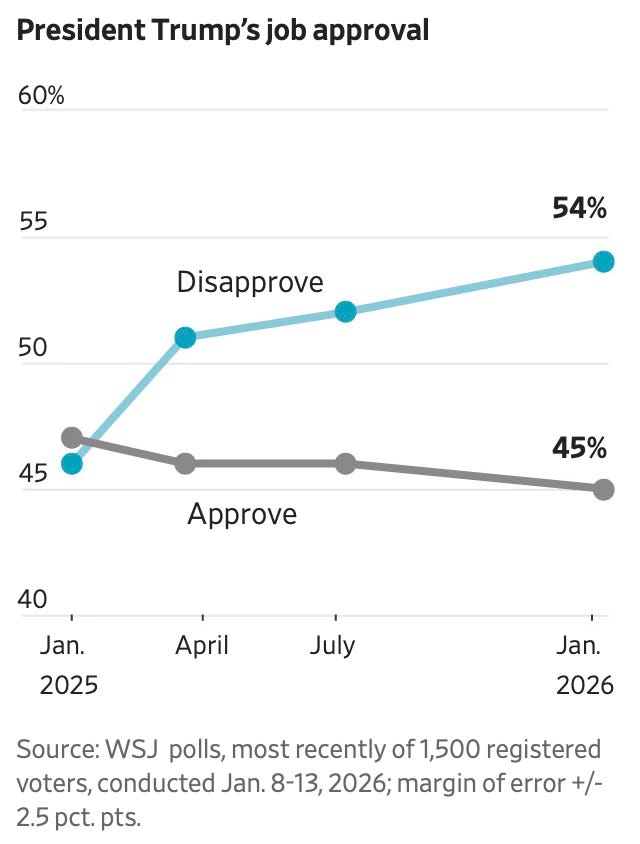
Still, even the crowd is starting to sober up. More than half the country now disapproves of the President’s performance.
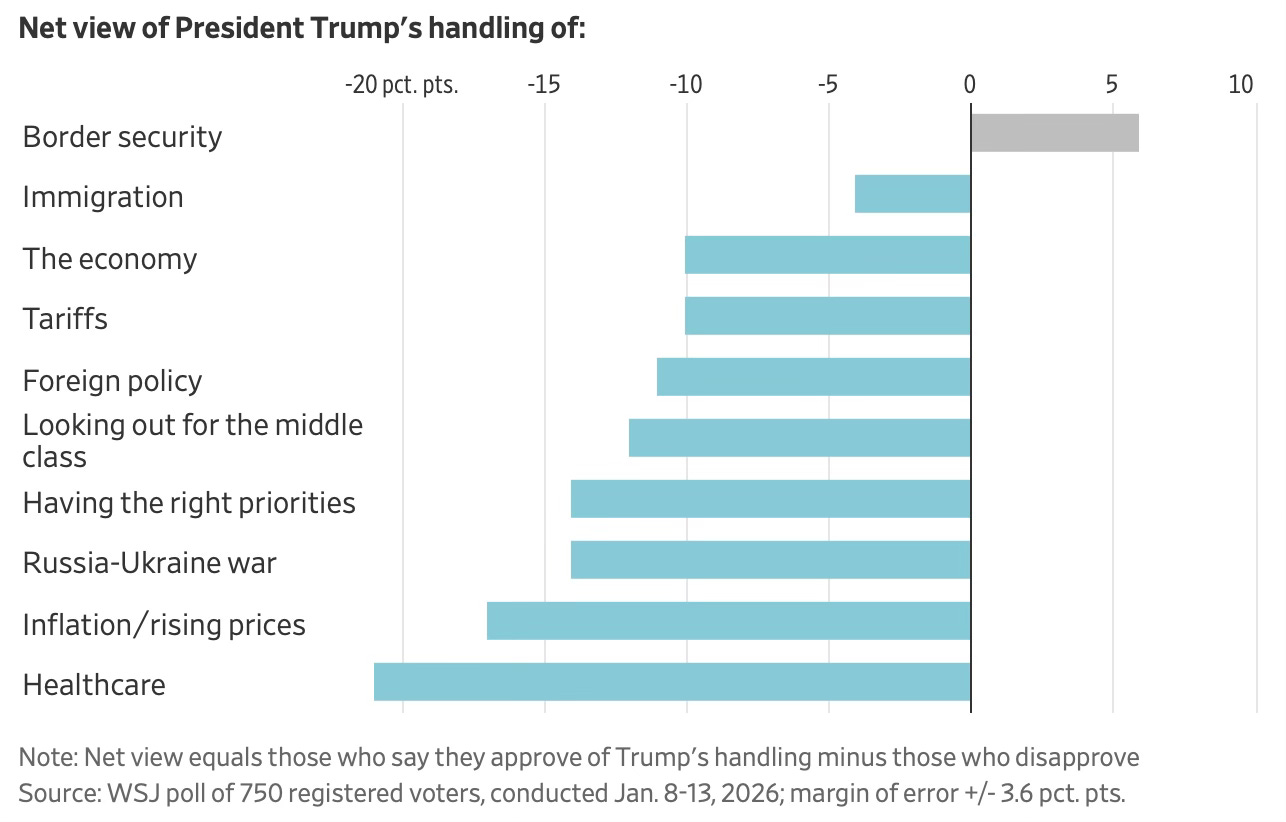
The lone exception? Border security. Everything else polls like unrefrigerated seafood: immigration, the economy, tariffs, foreign policy, inflation, healthcare, the middle class, and the charming little matter of a land war in Europe.
Markets, at least, have staged a heroic recovery since April 2 (when the administration briefly attempted to strangle them in public). Credit where it’s due: investors have a higher pain tolerance than voters.
Which brings us to the real threat … the one that actually matters to your money.
Federal Reserve independence.
I warned about this back on September 1, but here we are again. Our convicted-felon-in-chief — brilliant at corruption, world-class at grift, mysteriously allergic to basic economics — has returned to his favorite hobby: trying to bully the Fed into submission.
An administration-controlled Fed is not a theory. We’ve seen the movie. It’s called Turkey, and it doesn’t have a happy ending.
When markets start doubting the Fed’s independence, the dominoes fall fast:
Higher inflation
Higher long-term interest rates
Higher borrowing costs
Higher cost of living
Capital fleeing the U.S. like rats off a flaming Treasury bond
A weakened dollar
Global financial instability, courtesy of American amateur hour
This is how you torch a nation’s wealth without ever lighting a match. Just undermine credibility and let gravity do the rest.
Once again, The Dumbold is sniffing around the load-bearing walls of the financial system with a sledgehammer and a grin.
My takeaway?
Let the country burn. Position accordingly. Volatility is opportunity, and chaos has always been a growth industry.
Oh, and while we’re at it: Release the Epstein files.
THE RECAP
All of last month’s trades expired without being exercised, locking in a potential annualized return of up to 17%, depending on the trades you made.
Our model option-selling portfolio ended 2025 up 15.76% for the year and up 20.98% annualized since inception in 2009. Note: this return is based on a real account with real trades and real money.
To learn more about executing put-selling strategies (and selling calls on existing positions), take a look at our December newsletter.
THE TRADES
And now … the moment we’ve all been waiting for … the reason this newsletter exists and why it matters … the trade ideas we’re considering this month!
Sell-to-open TQQQ 2/20 43 Puts at $0.70 for an estimated 23.8% annualized.
Sell-to-open TNA 2/20 42 Puts at $0.32 for an estimated 12.3% annualized.
Sell-to-open QQQ 2/20 575 Puts at $3.20 for an estimated 8.1% annualized.
As always, I include the QQQ ideas for those who don’t have access to trading options on triple ETFs like the TNA or TQQQ.
Note: we’re evaluating these trades after the market is closed. Your mileage (premium received) may vary as markets change overnight.
“"Plan your trade and trade your plan.”
— Anonymous Market Wisdom
WHAT I DO IN GENERAL
I typically employ a 50-50 mix of TNA and TQQQ put sales in a portion of my account and implement the Global Tactical Asset Allocation (GTAA) strategy in the remainder. You can choose the combination of put-selling, GTAA, and other portfolio strategies that works best for you.
BACKGROUND
It's important to understand the nature of these ETFs in order to understand their behavior in the market.
TNA is a triple ETF that tracks the Russell 2000 index, meaning its daily movements are three times the magnitude of the Russell's daily changes. For instance, if the Russell 2000 goes up 1% in a day, TNA would experience a 3% increase. This “amplification” applies to both upward and downward market moves.
Similarly, TQQQ is a triple ETF that mirrors the NASDAQ 100 index, exhibiting comparable behavior to TNA. Its daily fluctuations are three times the NASDAQ 100's daily moves.
While TNA and TQQQ offer substantial potential returns, it's worth noting that some brokerages may not permit options trading on triple ETFs or may require a higher level of option trading authorization, due to their leveraged nature. Therefore, I include QQQ in my analysis.
QQQ is a “regular” ETF that tracks the NASDAQ 100 index without the triple leverage aspect. By incorporating QQQ, you can accommodate situations where options trading on triple ETFs is restricted or requires additional permissions.
For more information on our put-selling strategy, visit our strategy page.
DISCLAIMER
It's always important to conduct thorough research and analysis before engaging in any investment strategy. It's also important to know that trading options involves risks, and the profitability of a trade depends on various factors, including market conditions, individual circumstances, and the behavior of the underlying asset. While the outcome of these trades may have been favorable in the case illustrated in this newsletter, it's crucial to thoroughly understand the risks and potential rewards of options trading before engaging in such activities. Please refer to our full disclaimer and review the Characteristics and Risks of Standardized Options document.
NEXT STEPS
Questions: If you have any specific questions or would like further information regarding options trading, please feel free to ask.
Share: If you have found this content useful, please share this post.
Subscribe: If you’re still in your trial period, don’t forget to subscribe, so you never miss our monthly trades!